
|
The reissue figures have a slightly glossier look, and very slightly slicker feel, than the originals. The reissue figures aren't distorted, and molding quality is generally OK. However, surface detail isn't quite as good. Consider this image, a negative of a B&W photo of (at right) an original-issue Iguanadon, and (at left) a reissue of the same figure. 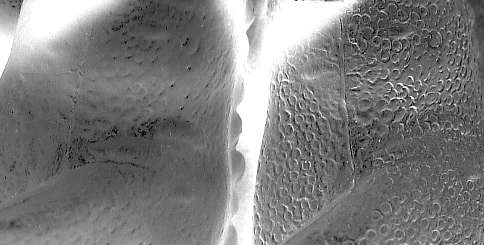
Aside from this minor surface deterioration, Quality Control seems to have been good during both Marx original production and the reissue periods. One of the tricks manufacturers use to lower production costs is to decrease mold cycle times (when they first appeared, the Marx dino figures retailed in the 10-15¢ range, so production cost was clearly a consideration). The injection-molding machine squirts molten plastic resin into a heated mold at high pressure; the mold is then cooled, and the plastic hardens. When it's hard enough, the mold is opened, and the plastic part removed. Then the mold can be closed, reheated, filled with plastic by the injection machine, and the cycle repeated. Every second which can be shaved off the cycle increases the number of parts which one mold can make during a shift. Manufacturers have been known to shave off a second or two too much time in the cooling cycle, removing the parts before they're sufficiently cool and hardened. Under such conditions, the parts are sure to warp and distort. Although some dino figures suffer from this, it does not seem to have been a problem at Marx, during either the original production or reissue eras. |